
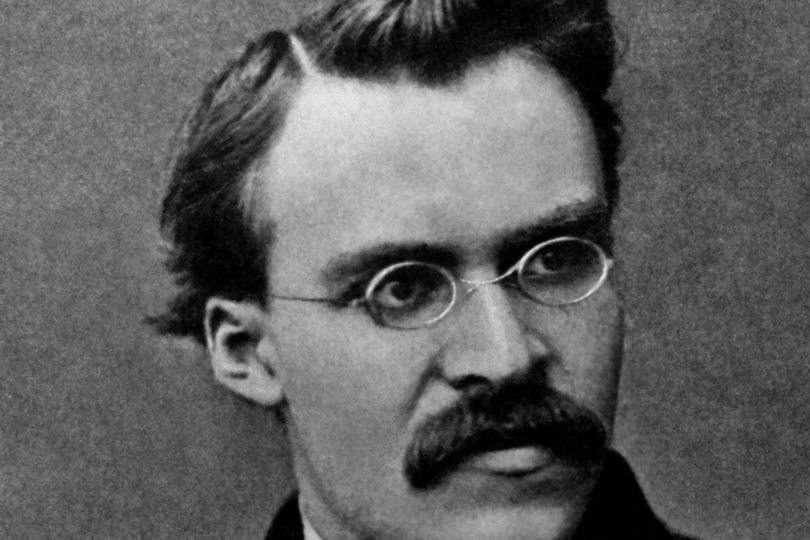
End of History in Nietzsche's Philosophy between Reasonable, Unreasonable

Share this post :

This research paper presents a critical inductive vision of Nietzsche's reading of the philosophy of history and understanding its mysterious existential questions,

 which represented a decisive intellectual turning point in the history of Western thought as a whole, as he contributed through his genealogical reading of history, to the transition from the stage of modernity to the stage of post-modernity, then to transcend the Western philosophical conception, aiming at build the history of humanity, and not to destroy it by creating new concepts, which serve human civilization in the stage of post-modernity.

Nietzsche sought to make his philosophy speak about his era, and its weakness and frailty. This explains his why he is averse to it, rejects it, and considers it as a kind of intellectual decadence, and weakness that must be changed and overcome, by finding new concepts that serve humanity. However, this philosophy has led him into a series of intellectual and ideological pitfalls, which have made it the subject of wide-ranging intellectual debate. So, how did Nietzsche understand history, and on what foundations did he build his genealogy in the philosophy of history, and what are the most important philosophical pitfalls that his philosophy fell into?

Comments


Oumam magazine, for Human and Social studies, is a peer-reviewed quarterly scientific periodical, issued by "Baratha Center in Beirut and Bagdad. It is concerned with criticizing Western visions of humanity and society in various fields . on the other hand, rooting them from a rational standpoint, that is consistent with the requirements of human nature, and with the original metaphysical cosmic vision of human society.The magazine aims to confront the Western intellectual challenges imposed by the West on our Arab and Islamic societies, through:
Open Access Statement
This is an open-access journal which means that all content is freely available without charge to the user or his/her institution. Users are allowed to read, download, copy, distribute, print, search, or link to the full texts of the articles, or use them for any other lawful purpose, without asking prior permission from the publisher or the author. This is in accordance with the BOAI definition of open access.
All articles published in this journal are licensed under a Creative Commons Attribution 4.0 International License (CC BY 4.0). Under this license, authors retain ownership of the copyright for their content, but allow anyone to download, reuse, reprint, modify, distribute, and/or copy the content as long as the original authors and source are cited.
messages.copyright © 2023, Oumam for Humanities and Social Studies