
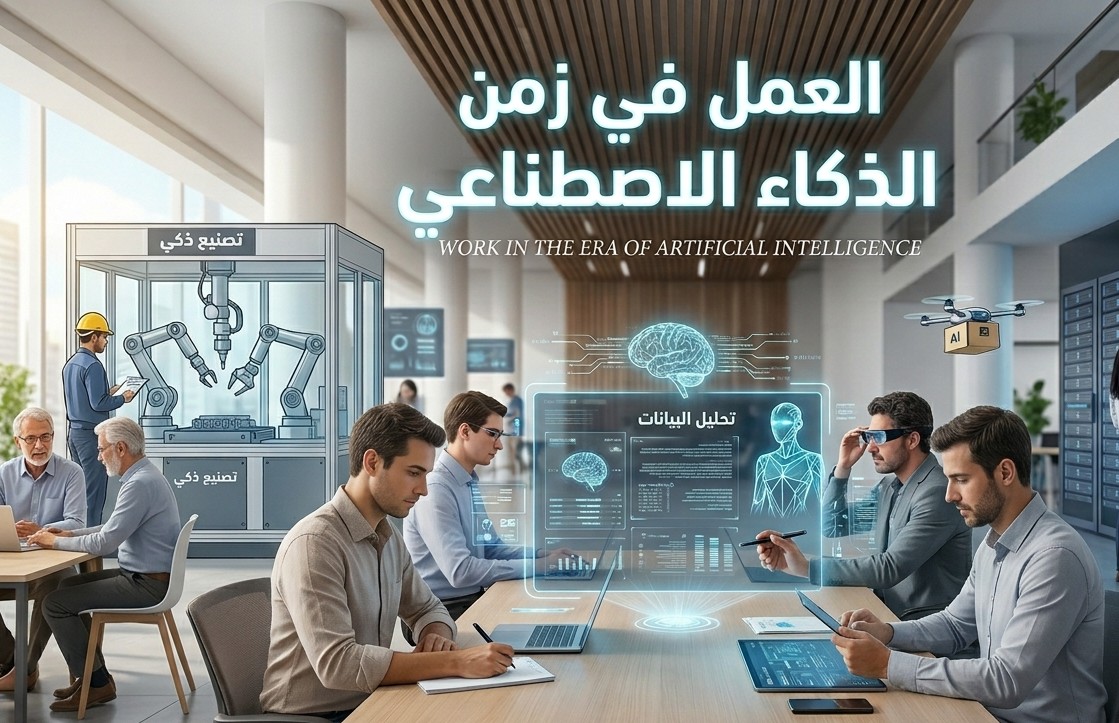
It begins with a philosophical perspective that views work as a cornerstone of self-realization, then explores the concept of "alienation" as a state of separation from work and society. With the acceleration of digital transformation, alienation has taken on a new dimension dominated by algorithms and data, where workers are subjected to monitoring and evaluation within opaque systems. It also discusses the impact of automation on the labor market through job fragmentation and the replacement of routine tasks, which exacerbates the polarization between high-skilled and low-skilled jobs and leads to the erosion of the middle class. It highlights the role of the platform economy in deepening job insecurity and placing the burden of risk on individuals, while simultaneously pointing to the rise of tech elite that widens the digital divide.
The research also addresses ethical issues such as privacy
concerns and algorithmic bias, emphasizing that guiding technology
towards equitable paths depends on public policies and social choices.
It concludes that the future of work is determined not only by technical data, but also by political and ethical choices, and that preserving human dignity requires an integrated system of continuous education, social protection, and fair and sustainable legislation.


Comments