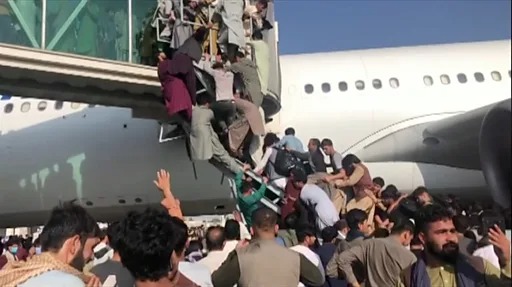
US Invasion of Afghanistan and Crimes against Humanity

Share this post :

Afghanistan has witnessed many invasions in its modern history, due to its terrain, and strategic location at the crossroads of Central Asia, the Indian subcontinent and the Middle East,

where it had borders adjacent to the British expansion areas in the south, and also to the Russian expansion areas in the north. This privileged location made it vulnerable to British and Russian invasion. The ordinary Afghans bore all the negative effects of the repeated foreign invasion of their country. After the attack on the United States of America on September 11, 2001, America launched a fierce war against Afghanistan - under false pretenses and misleading claims - calling its war against Afghanistan the "War on Terror". America has developed its brutal wars to a frightening extent, turning from wars on terror into “terrorist wars” waged against all countries hostile to it and opposed to its aggressive policies. America has committed brutal crimes against Afghan civilians, and used internationally banned weapons to kill people and destroy the environment. The American invasion of Afghanistan has led to the collapse of the Afghan economy. 
Comments


Oumam magazine, for Human and Social studies, is a peer-reviewed quarterly scientific periodical, issued by "Baratha Center in Beirut and Bagdad. It is concerned with criticizing Western visions of humanity and society in various fields . on the other hand, rooting them from a rational standpoint, that is consistent with the requirements of human nature, and with the original metaphysical cosmic vision of human society.The magazine aims to confront the Western intellectual challenges imposed by the West on our Arab and Islamic societies, through:
Open Access Statement
This is an open-access journal which means that all content is freely available without charge to the user or his/her institution. Users are allowed to read, download, copy, distribute, print, search, or link to the full texts of the articles, or use them for any other lawful purpose, without asking prior permission from the publisher or the author. This is in accordance with the BOAI definition of open access.
All articles published in this journal are licensed under a Creative Commons Attribution 4.0 International License (CC BY 4.0). Under this license, authors retain ownership of the copyright for their content, but allow anyone to download, reuse, reprint, modify, distribute, and/or copy the content as long as the original authors and source are cited.
messages.copyright © 2023, Oumam for Humanities and Social Studies