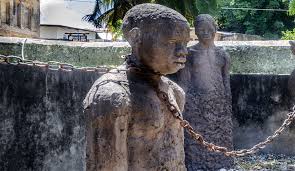
Reading a Book: Racism

Share this post :

Western bias in addressing moral issues is a prominent phenomenon, reflected in the double standards applied to different peoples and cultures.

 The thinker Noam Chomsky, in most of his works, pointed out to this bias, where he criticized Western policies for being inconsistent with the principles they claim to uphold. Morin also highlighted on it in some of his writings, where he explained that the West suffers from a crisis in understanding and dealing with global complexities, which leads it to apply double standards in its policies. In this context, François de Fontaine's book "Racism" is considered an objective analysis of the phenomenon of racism.

However, the reader notices that the writer has fallen into the trap of the double standards criticized by both Chomsky and Moran. Despite his attempt to present a neutral perspective, his analysis was influenced by the cultural and political biases prevalent in the West.
Comments


Oumam magazine, for Human and Social studies, is a peer-reviewed quarterly scientific periodical, issued by "Baratha Center in Beirut and Bagdad. It is concerned with criticizing Western visions of humanity and society in various fields . on the other hand, rooting them from a rational standpoint, that is consistent with the requirements of human nature, and with the original metaphysical cosmic vision of human society.The magazine aims to confront the Western intellectual challenges imposed by the West on our Arab and Islamic societies, through:
Open Access Statement
This is an open-access journal which means that all content is freely available without charge to the user or his/her institution. Users are allowed to read, download, copy, distribute, print, search, or link to the full texts of the articles, or use them for any other lawful purpose, without asking prior permission from the publisher or the author. This is in accordance with the BOAI definition of open access.
All articles published in this journal are licensed under a Creative Commons Attribution 4.0 International License (CC BY 4.0). Under this license, authors retain ownership of the copyright for their content, but allow anyone to download, reuse, reprint, modify, distribute, and/or copy the content as long as the original authors and source are cited.
messages.copyright © 2023, Oumam for Humanities and Social Studies