
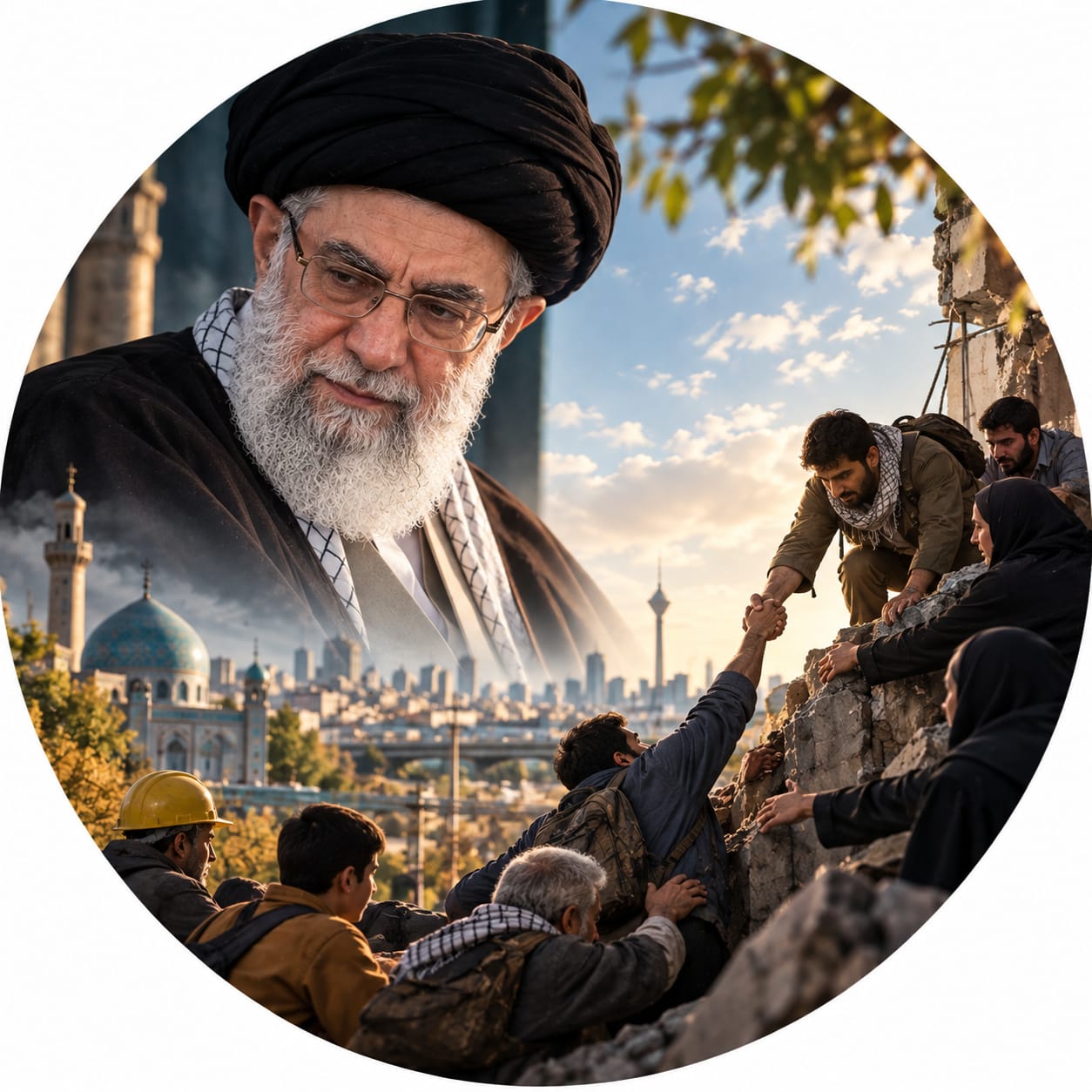
It presents Sayyid Khamenei's (QS) distinctive conception of the Islamic Revolution as a global civilizational project while preserving its Iranian cultural and historical specificity. It distinguishes between the revolutionary state and the traditional state based on fundamental criteria relating to continuous dynamism, the revolutionary spirit within institutions, and the doctrinal relationship between the leadership and the masses.
The study proposes a conception that combines divine sovereignty as the ultimate source of legislation with popular sovereignty as the nation’s right to choose its system of government, through a distinction between legislative sovereignty and executive sovereignty. It also addresses the challenge of reconciling doctrinal constancy with the requirements of state governance by distinguishing between immutable principles and variables, as well as between negative justice and positive justice. The study concludes that Sayyid Khamenei's (QS) thought constitutes a substantive contribution to contemporary Islamic political thought.


Comments