
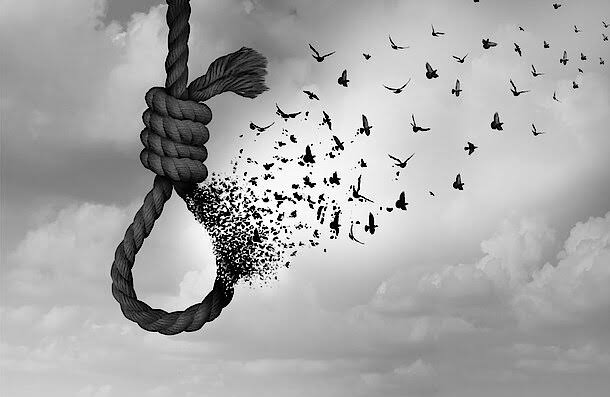

This outcome is the product of its formation; the reason that set itself up as an absolute reference, its rigor led it to question every reference, until the questioning reached its own throne, and certainty turned against itself with its tools. Tracing this path, from establishing certainty to its fragmentation, goes beyond reading a Western crisis awaiting from afar, to questioning an awareness that is conflicted by the effects of both systems.
First: Certainty Age, Knowing-Self Foundation
At the dawn of modernism, the European reason stood in search of solid ground upon which to build its edifice, after the authority of inherited tradition, ecclesiastical scripture, and the image of the closed medieval cosmos had been unsettled in its consciousness. When René Descartes subjected all knowledge to rigorous methodological doubt, his aim was a single foundational purpose: to reach a certainty immune to doubt. He carried doubt down to its deepest level; and when nothing remained that could be questioned, the sought-after foundation was revealed in the thinkingpsyche itself. For as long as he doubts, he thinks, and as long as he thinks, he exists. With this single movement, the "ego" became a point of reference upon which the world was raised, and the centre of gravity in the grounding of truth shifted from Allah, the cosmos, and tradition to the knowing psyche, psyche-sufficient in its own presence to itself. This is what we term here "The Egoization" [al-anwana]: the reduction of the entire orbit of meaning to the "ego" as origin and foundation.
With this shift, the position of the human being in existence was radically transformed. The psyche, which in the traditional worldview had been an element within a cosmic order transcending it and granting it meaning, became in the modern view the source of that meaning and its giver. Reason became a legislator, imposing its categories and laws upon nature, extracting its order from itself before seeking it within it. This "egoization" [al-anwana] reaches its peak with Immanuel Kant, when he declares that the mind prescribes the laws of nature, and thus objects revolve around the knowing subject like planets around its sun. Thus the modern subject was born: psyche-aware, autonomous, transparent to itself, and confident that it possesses the full instruments of truth.
The Enlightenment extended this foundation from the field of knowledge to civilization as a whole. Reason rose to the rank of supreme authority, adjudicating religion, politics, ethics, and science. Immanuel Kant's call, "Dare to Know", became an announcement of humanity's coming of age and its emergence into an independence in which the judgment of reason becomes final and beyond appeal. In this climate, widespread confidence took root: every obscurity would be illuminated, every superstition dispelled, and every unknown reduced to the known. Truth, in its essence, is accessible to reason, and ignorance is merely a transient condition dissolved by continuous progress.
This confidence found its strongest support in the scientific revolution. Galileo Galilei declared that the book of nature is written in the language of mathematics, and Isaac Newton constructed a cosmic edifice governed by universal laws that predict the motion of the atom as they predict the motion of the galaxy. The certainty thus appeared as a tangible reality measurable, predictable, and controllable. The universe became a precise machine transparent to reason, its hidden dimension retreating as inquiry penetrated its details, a process we may call, "the Recession of the Unseen" [nukūṣ al-ghayb], meaning the shrinking of the unknown domain assigned to transcendence in the face of the expanding measurable and calculable. From this victory emerged the architectural model of modern knowledge: a cumulative structure resting on psyche-evident foundations immune to doubt, upon which layers of certainty are stacked in steady, unceasing progress.
The deepest mark of the age of certainty was its civilizational promise. Certainty became, in modernism, a salvific stance promising to liberate humanity from nature, tyranny, and superstition, making science the means of dominion over the world, replacing all transcendent authority. Thus, certainty became inseparable from the will to possession, forming two faces of a single reality: "The Sovereign Certainty" [al-tayaqqun al-siyādī] a form of knowledge sought for empowerment, and a certainty measured by its capacity for domination. Modern humanity was promised mastery over nature and the capacity to fashion its own salvation on earth. The progress replaced the providence, the future replaced the afterlife, and there emerged "The Reckoned World" [al-ʿālam al-muḥāsab]: a flattened realm reduced to utility and measurement, stripped of sacredness, and made fully transparent to calculating will.
Thus, the Western civilization reached the peak of its psyche-confidence, believing itself to have firmly grasped the reins of truth. Yet within this very apex lay the paradox that would open the way to what follows: reason, having adopted methodological doubt as its primary tool, carries within itself a tendency that refuses any final limit; and from its excess in the pursuit of certainty arises the fracture that ultimately turns its doubt back upon its own foundations.
Second: Internal Fracture
The very instrument with which the modern mind constructed its certainty carried an inherent drive to push toward its conclusion; thus, its methodological doubt refused to halt at the boundaries originally set for it. No sooner had the edifice stabilized upon its psyche-evident foundations than doubt turned back to interrogate those very foundations, just as it had previously scrutinized everything else. This "Recoiling Doubt" [al-shakk al-murtadd] marked a moment where critique turned its gaze upon its own premises, questioning the very ground on which it stood.
On this turning point, the works of those known as the masters of suspicion were founded. Karl Marx, Friedrich Nietzsche, and Sigmund Freud, each from his own perspective, stripped away the mask from a consciousness that believed itself transparent and sovereign over its own categories.
They revealed that what thepsyche presents to itself as immediacy and clarity is but a surface beneath which operate forces beyond its control: class interest, the will to power, and repressed desire. With this unveiling, the transparency of the "knowing Psyche" that Descartes had elevated as the foundation of truth was shattered. This demystification reached its peak in Sigmund Freud, who displaced the ego from its throne within its own house. He demonstrated that beneath consciousness lies an unconscious that directs it without its awareness, and that what one assumes to be a free decision emerging from pure reflection is in fact dictated by hidden drives rooted in the depths of the psyche. In this way, the "Cogito" was fractured at its core: the ego that had guaranteed its own full presence became a guest in a house governed by another, receiving from darkness what it mistakes for its own light.
Karl Marx reduced the movement of thought to its material and historical conditions, showing that ideas which appear universal and neutral are grounded in class interests and positions within production, and that much of what is called truth is in fact false consciousness that conceals its own conditions from the subject. Thus was revealed the "Inhabited Reason" [al-ʿaql al-maʾhūl]: a mind already occupied, before it thinks, by will, interest, and position, such that its apparent pure abstraction is governed by what it cannot see. In this way, the reason lost the neutrality that had been the cornerstone of its authority in the Enlightenment.
As for Friedrich Nietzsche, he brought the hammer to the entire metaphysical foundation. He proclaimed the "Death of God" as an announcement of the collapse of the transcendent reference that had guaranteed the stability of meaning and the permanence of values, leaving truth itself without firm ground. He excavated the genealogies of morality and knowledge and found beneath claims of disinterested truth a will to power imposing itself under the guise of objectivity. Thus, the "Sovereign Certainty" turned against itself: what presented itself as pure, interest-free knowledge was revealed to be a desire for domination disguised as proof.
This fracture extended even to the last stronghold of certainty: rigorous science. In mathematics, Kurt Gödel demonstrated that any sufficiently rich formal system contains true propositions that cannot be proven within its own rules, rendering the foundation incapable of securing its own completeness. In physics, the uncertainty principle established that the act of observation necessarily interferes with the observed, making it impossible to attain a description of nature independent of the observer. Thus, the "Fracture of the Foundation" [inṣidāʿ al-asās] infiltrated the very psyche-evident principles upon which the architectural edifice of knowledge had been built, and the "Reckoned World" [al-ʿālam al-muḥāsab] lost the total transparency it had once promised.
What unites these divergent paths is a single law: its own instruments undo certainty. The doubt it instituted, the critique it refined, and the rigor by which it measured the world are precisely what turned back upon its foundations, dismantling them from within. In this "suicide of certainty," the pursuit of proof reaches a limit where it turns upon its own demands and finds nothing immune from questioning. On this fractured ground, where the securing foundation has vanished and no substitute has arisen, space opens for a moment in which the absence of foundation itself becomes principle. That is the direction of what follows.
Third: Postmodern Moment, Deconstruction of Frames of Reference
The preceding era left the intellect on fractured ground, searching in vain for a foundation. After lingering in this open void, the intellect shifted from reluctantly accepting the absence of a foundation to adopting that very absence as a starting point and principle. Here, postmodernism reveals itself as the "Legitimization of the Fracture"; it transforms the wound left by the "Suicide of Certainty" into a doctrine upon which a worldview is built, turning what was once a tolerable crisis into a celebrated principle. Consequently, the fundamental question shifted from how to restore a foundation to how to think and live without any foundation whatsoever.
Jean-François Lyotard was the first to encapsulate this condition in a definitive phrase, defining postmodernism as "Incredulity toward Metanarratives." The modernism had legitimized its knowledge systems through grand narratives promising a unifying purpose, such as the emancipation of humanity through reason, the progress of the Spirit through history, and the accumulation of scientific knowledge toward an ultimate truth. These narratives had granted knowledge its legitimacy and unified its disparate elements around a single goal; yet, when their credibility collapsed, knowledge fragmented into a collection of adjacent, localized "language games." Each game operated by its own rules, with no supreme arbiter to adjudicate between them. Thus, the "Sovereign Certainty" lost its universal anchor, shrinking from a claim of totality to a plurality of discourses, none of which could claim superiority over the others based on demonstrable proof.
Jacques Derrida proceeded to the very core of the relation upon which certainty had been founded: the relation between signifier and signified. He demonstrated that meaning refuses to fully present itself in any given moment; the signifier refers to another signifier in an unclosed chain, while the final signified is perpetually deferred without ever being reached by the reader. On this basis arose the "Deferred Meaning" [al-maʿnā al-murjaʾ], a meaning generated through differences and referrals, one that promises but never fulfills, and constantly points beyond itself. The notion
of a "transcendental signified," which was hoped to halt the slippage of signs and ground language on stable terrain, thus disappeared.
The text became an open fabric that deconstructs itself, carrying within it what undermines its own claims.
Michel Foucault displaced the subject from the position of origin that the "Egoization" had granted it at the dawn of modernism. He showed that the subject itself is an effect produced by networks of knowledge and power, shaped within their rules; discourse precedes it and determines the limits of what it can say and think. Thus, the "Subject-as-Effect" [al-dhāt al-athar] replaced the "Knowing Psyche" a result of relations that precede it and define the scope of its possible speech and thought, after it had once been regarded as the source and foundation of meaning. From the conjunction of knowledge and power emerged the "Manufactured Truth" [al-ḥaqīqa al-maṣnūʿa]: a truth produced within regimes of discourse, where each society has its own system that determines what counts as truth and who is authorized to certify it. In this way, the reversal initiated by Friedrich Nietzsche was completed: truth is a face of power before it is a disclosure of reality.
This trajectory reached its culmination with Jean Baudrillard, when the sign became completely detached from its referent. He argued that in the world of media and consumption, the image precedes reality and replaces it, producing it in its own form until it becomes prior to what it claims to represent. This is the "Precedence of Simulation" [sabq al-muḥākāt]: where the map precedes the territory, and the image precedes its origin, until the original is lost behind its copies and the world becomes a hyperreality in which images reproduce themselves without grounding in anything real. Here, the "Recession of the Unseen" is paradoxically inverted: the world once promised to become transparent to reason through measurement and calculation instead becomes obscured by its own proliferating images. The reality is concealed behind excess representation, just as it was previously concealed behind transcendence.
Through these converging movements, the entire architectural reversal of modernism was completed. Truth became manufactured rather than discovered, the subject became an effect rather than an origin, meaning became deferred rather than present, and reality became an image rather than the referent of images. What had earlier been the "Fracture of the Foundation," once a problematic symptom, now became the very principle from which thought proceeds. The grand reference points, reason, subject, meaning, and reality, were successively dismantled, leaving the field without a stable center around which knowledge might revolve.
This deconstruction has two inseparable faces: a liberating one: it exposes the will to power embedded in claims of universal truth, frees thought from a dogmatic certainty that had elevated a particular worldview into an absolute measure, and listens to voices excluded by grand narratives in the name of reason and progress. The second is destructive one: once every foundation is revealed as a construct of power, the criteria by which truth is distinguished from falsehood, justice from injustice, and resistance from submission begin to collapse; for to claim that all truth is constructed is to pull the ground from beneath every critique, including the critique itself. At this ambiguous threshold, where the absence of criteria itself becomes a criterion, the experience of epistemic chaos emerges as something lived.
Fourth: Epistemic Chaos as Existential Condition
The effects of deconstruction did not remain confined to the classroom; ideas possess an inherent pull that draws them into the realm of reality, transforming them into lived experiences before they become mere theories. What philosophers diagnosed as an absence of foundation translated, in the consciousness of the ordinary person, into a sensation of the ground shifting beneath their feet. Here, epistemic chaos ceased to be merely a subject of academic discourse; it became a tangible reality shaping how people relate to truth, the world, and themselves.
When shared standards for distinguishing the true from the false dissolve, the era of "Post-Truth" sets in, a time when emotion prevails over evidence, and repetition and spectacle supplant proof. The "Manufactured Truth" becomes a daily practice: competing narratives, each with its own audience, exist in the absence of any supreme authority to adjudicate between them. As these narratives multiply, public trust in the institutions that once guaranteed knowledge, such as science, journalism, and expertise, erodes. Consequently, every statement becomes subject to automatic suspicion, and established truth is placed on equal footing with fabricated falsehood.
This condition is further intensified by a flood of unanchored images and narratives, until “the precedence of simulation” becomes an everyday environment in which the individual drifts, submerged in information that exceeds their capacity and unable to distinguish the true from the fabricated. In this state of immersion, the resistance of consciousness becomes weaker and more fragile, opening space for those who possess the tools of representation and influence. For the absence of foundation leaves a void that refuses to remain empty, and it is filled by the power that excels in shaping perception and directing attention. Thus, the chaos is experienced both as imposed and as spontaneous; for there are those who exploit it and sustain it. The more the criterion fragments within collective consciousness, the easier it becomes to shape it from the outside. At this point, the crisis of knowledge turns into a battlefield over consciousness itself.
Beyond the public sphere, the individual pays the price of this absence in the depths of their own being. The psyche, having lost its original position and becoming the "Subject-as-Effect" that receives its image from outside itself, lives in the "Vertigo of Meaning" [duwār al-maʿnā], a loss of orientation that afflicts one who is offered unlimited choice while being required to construct themselves without any guiding measure. Identity fractures into shifting masks, and the burden of freedom without reference becomes heavy; one is able to choose everything, yet lacks anything that obliges the choice of one thing over another. From this vertigo arises a persistent anxiety that refuses stillness, for it is an anxiety without a determinate object to confront or overcome.
At the end of this path, nihilism awaits. Relativism, when carried to its extreme, culminates in suspicion that nothing is truer or more worthy than anything else, and thus the will loses its object and turns empty upon itself. Faced with this void, people are divided between a silent despair over the meaninglessness of meaning, and a frantic escape into consumption, entertainment, and spectacle, through which one attempts to fill what refuses to be filled. Friedrich Nietzsche foresaw this arrival when he named nihilism as the strangest of all guests standing at the door. Thus, the "Reckoned World," which had promised sovereignty and a world fully available to grasp, delivers instead a world that is accessible yet emptied of meaning that could justify living within it.
The impact extends beyond individuals to civilization itself. A civilization unable to ground its values is unable to defend them or transmit them to its successors. The West, having dismantled its own foundations, finds itself unable to say why its freedom is worth preserving over its opposite, or why its justice is preferable to others' injustice; for whoever removes the criterion from themselves loses the capacity to appeal to it against others. This is the exhaustion at the heart of triumph: a material mastery of the world accompanied by an inability to justify that mastery, and sovereignty over things paired with confusion over meaning. At this point, epistemic chaos reveals itself for what it is: a civilizational crisis that has lost the ability to affirm itself after acquiring the ability to dominate everything.
Thus, the epistemic chaos poses its question to us, standing at the threshold between two systems: is it an internal Western affliction observed from a distance, or does it reach us through the channels of symbolic hegemony, exported as it is lived there? For nihilism, once produced, becomes generalizable; and a fractured consciousness at the center can be replicated at the peripheries. Moreover, in this question lies the deeper one: where do we stand, and upon what foundation do we respond?
Fifth: From Observer Position to Accountability Position, Where We Stand?
Upon tracing this path, one is inclined to adopt the stance of an observer, viewing the fragmentation of Western certainty as an internal affair concerning the other shore. Yet, this perspective overlooks the fact that symbolic hegemony has erased the distance between the two shores, transforming the Western condition into a cultural milieu that encompasses its periphery just as it does its center. Thus, shifting from observation to accountability requires recognizing this interconnectedness and subjecting our own awareness, as part of the equation, to scrutiny before passing judgment.
In this context, there are two opposing errors. The first is to read the West's crisis as our own victory, confusing the weakness of the other with the soundness of the psyche, while overlooking the seepage of the same chaos into our own intellectual space. The second is to import deconstruction and relativism as the ultimate outcome of contemporary thought, adopting the "Legitimation of the Fracture" as if it were liberation, and transferring the "Vertigo of the Meaning" into a consciousness grounded in an entirely different foundation. The first error blinds us to an existing danger; the second invites it in willingly. Our position differs from that which gave rise to modernism. The philosophical heritage to which we belong did not undergo the process of the "Egoization" that installed psyche-sufficient reason as the sole foundation. Rather, it connected knowledge to being, and anchored the order of meaning in a transcendent reference that remained beyond human construction, granting reason a high rank without making it the sole source of truth.
This position opens a horizon that transcends the Western dilemma, closed dogmatism on one side and open nihilism on the other, because it preserves within its structure the image of a foundation that is stable without being closed.
On this basis, the fragmentation of Western certainty becomes a matter for reconsideration: the possibility of re-establishing knowledge on a ground that connects reason to the transcendent, and the knowing subject to the order to which it belongs, thereby moving beyond both modern dogmatism and postmodern nihilism. This is what may be called the "Open Certainty": a certainty grounded in a foundation that transcends the psyche, yet remains open to inquiry and revision; it affirms truth without claiming absolute possession of it, and it stands upon a reference without freezing it into closure. It differs from the "Sovereign Certainty," which measures knowledge by its capacity for domination, and from the "Legitimation of the Fracture," which elevates the absence of foundation into a principle.
This horizon is a responsibility before it is a conclusion. The critique of the West requires, first and foremost, critique of the psyche, in order to measure what has silently accumulated within our own perception. This is a "Recoiling Interrogation" [al-musāʾala al-murtadda] directed toward our own consciousness, distinguishing what is original to our intellectual formation from what has been externally engineered through mechanisms of domination. A consciousness that fails to examine itself remains incapable of offering an alternative, reduced merely to reacting against what it rejects.
In sum, a civilization that dismantles its foundations loses its capacity for guidance, whereas one that renews its foundations through critique retains it. What culminated in fragmentation in the West can, for us, become the starting point for re-foundation, one in which meaning is reconnected to its ground and reason to what transcends it. In this transformation, from an ending there to a beginning here, lies the essence of the required stance: a position that transcends both gloating and imitation, and is grounded in an interrogation that begins with ourselves and extends to others.
It becomes clear from this trajectory that the West's passage from certainty to fragmentation is a single continuous movement governed by an internal logic rather than an accidental rupture. The rigor that constructed the edifice of certainty upon the "Egoization" and the "Sovereign Certainty" is the same rigor that returned doubt to its foundations in the "Suicide of Certainty," then elevated the absence of foundation into a principle in the "Legitimation of the Fracture," until the process culminated in the "Vertigo of Meaning" as a lived condition. The Epistemic chaos, in this sense, is the mature fruit of closed certainty, whose seed lies already within its moment of foundation.
This scenario offers two intertwined lessons for observers situated as we are: a warning against importing this outcome as a form of "advanced thought," and a call to return to the "Open Certainty", one that anchors knowledge in a foundation transcending thepsyche without constraining it. This path begins with the "Recoiling Interrogation" of our own consciousness, aimed at distinguishing the chaos that has accumulated within it from the enduring elements of its origins. In doing so, the results of the Western experience become a starting point for a theoretical endeavor that we undertake as active agents and founders.
From this vantage point of critical inquiry and foundational work, the studies in this issue are launched. They are concerned with addressing the epistemological disorder of postmodernism from its various aspects: in its philosophical roots, in the mechanisms through which it has been transmitted to us, and in what our heritage contains in terms of potential for rebuilding a foundation for knowledge that transcends the binary of dogmatic certainty and nihilism.
*The research papers in this issue's "Focus" section are as follows:
-"Reason, Truth in the Modern West: Transformations of Foundationalism, Fate of Certainty," is presented by Prof. Munther Jalloub (Iraq).
-"Science Without Certainty: Crisis of Objectivity in Modern Knowledge," is authored by Prof. Wael Ahmad Khalil Al-Kurdi (Sudan)
-"Postmodernism: When Doubt Became Epistemological Creed," is presented by Dr. Mahmoud Kishana (Egypt)
-Prof. Ali Hassan Ahmad, (Egypt), writes "Media, Manufacturing of Epistemological Chaos."
-Prof. Nezha Bouazza, from Morocco, presents "Question of the West's Current Civilizational Destiny."
*Regarding the "Foundations" section, Mr. Hisham Hassan Mortada, from Lebanon, addresses the topic of "Certainty, Knowledge in the Islamic Worldview: Towards Epistemological Horizon Alternative to Western Chaos."
*In the "Studies and Research" section, Dr. Ahmad Al-Bahnasi, Egypt, presents a research, which is titled "Zionism's Appropriation of the Jewish 'Messiah' Doctrine, Its Repercussions on Aggressive Israeli Practices."
*Finally, in the "Book Review" section, Syrian writer Lina al-Saqr summarizes the book "Modernism, Postmodernism" by Abdel Wahab El-Messiri and Dr. Fathi Triki.
While the magazine's editorial team hopes you enjoy reading this issue, we also hope that readers will share their valuable feedback with us.
Praise be to Allah, Lord of the Worlds.


Comments